Original CDMlogic guide · updated · Great Britain CDM / England or Wales Building Regulations where stated
“Willow House” is an invented domestic refurbishment in Great Britain. No customer, address or completed project is represented. The example explains record keeping; it is not a structural design, construction method, statutory approval or compliance assessment.
One project, connected decisions
A small practice needs to see how an unanswered question affects a drawing issue, appointment or handover item. The useful record connects the question to an owner, a review point and the evidence that resolves it. This example follows that thread through the project rather than creating a separate checklist for every document.
For the legal starting points, read the domestic-project guide for architects. Here, the focus is an original example of how your practice could organise the work.
From the first brief to handover
01 · Brief and scope
Homeowner requests a rear extension, ground-floor refurbishment and a new opening in an existing wall. Occupation during the works is undecided.
- Example record
- PJ-001: record the brief, site use, jurisdiction and assumptions. Ask the client how they expect to use the house during construction.
- Owner and next review
- Project architect · open until the brief and occupation assumptions are confirmed.
02 · Roles and appointments
A main contractor with specialist subcontractors is anticipated. The practice proposes a CDM Principal Designer service; no Building Regulations role is assumed.
- Example record
- AP-001: keep scope, issue reference, acknowledgement and appointment dates. Record who will carry the domestic client duties and the basis for that position.
- Owner and next review
- Practice lead · review before finalising the service scope; recheck if procurement changes.
03 · Information gaps
Old drawings show a wall but do not establish its construction or load path. A service route is unclear. The extent of existing hazardous-material information is unknown.
- Example record
- PCI-003: distinguish “drawing received” from “suitable information assessed”. Allocate separate actions for structural information, services and a competent assessment of survey needs.
- Owner and next review
- Project architect coordinates · relevant specialists assess the information within their remit.
04 · Design review
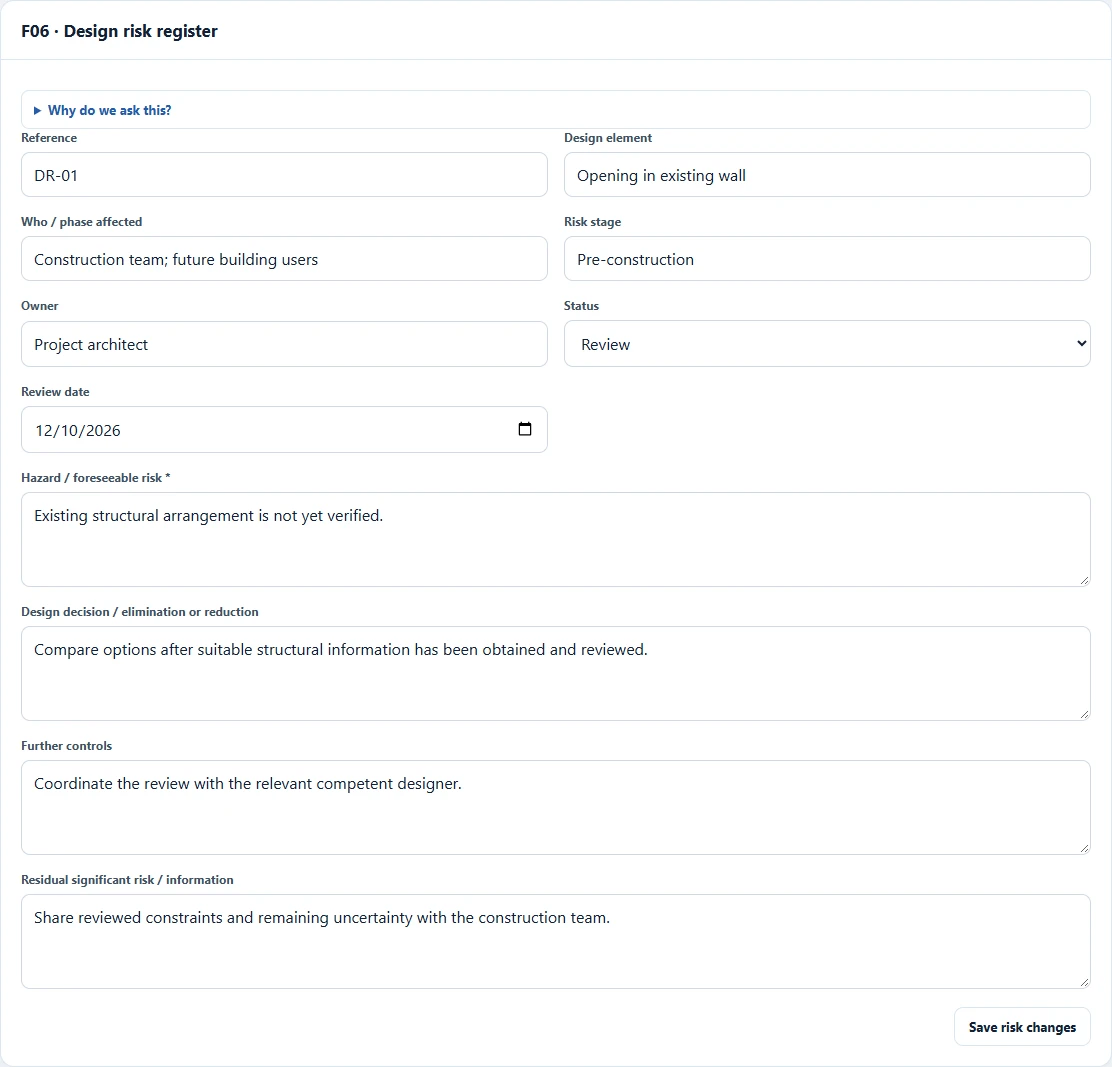
The team compares keeping the wall, revising the opening and developing an assessed structural proposal. The client prefers an opening, but preference is not the design justification.
- Example record
- DR-014: record options, assessment references, the actual decision and significant residual information. Keep the affected issue under review while material assumptions remain unresolved.
- Owner and next review
- Architect and structural designer · review before issuing the affected design and after relevant changes.
05 · Tender and issue
Tender information is being assembled while an access question remains unresolved. A generic note saying “contractor to check everything” would conceal the outstanding question.
- Example record
- ISS-005: issue the relevant reviewed information with its limitations; identify the open access action, recipient and required response. Retain revision, date and evidence of communication.
- Owner and next review
- Project architect · confirm the recipients have the current information.
06 · Before construction
The intended construction date approaches. The contractor needs the current design information and significant constraints, including the agreed occupation assumptions.
- Example record
- INT-006: record the coordination discussion, current information issue and unresolved actions. Identify the contractor’s construction phase plan arrangements without presenting an architect’s record as that plan.
- Owner and next review
- Principal Contractor leads construction planning · Principal Designer coordinates relevant design information.
07 · A change during the work
An opening-up report differs from an earlier assumption. The client also asks for a wider opening. Neither change is treated as an administrative drawing update.
- Example record
- CH-007: reference the finding and proposed change, allocate the design reassessment, identify affected documents and communicate the revised decision. Reopen DR-014 and related PCI actions as appropriate.
- Owner and next review
- Relevant designers · review the affected design before its further issue or use; coordinate the response with the Principal Contractor.
08 · Handover and closeout
The team prepares relevant information for future work. Some final design information is still awaited; a file index alone does not demonstrate receipt.
- Example record
- HSF-008: list relevant outstanding items, owners and follow-up dates. Record what was received, reviewed and issued, to whom and when. Keep an unresolved item visible rather than marking the whole record complete.
- Owner and next review
- Principal Designer within their appointment · confirm ongoing arrangements if the appointment ends early.
Turn an uncertainty into an actionable record
The following is an example of a useful internal action, not a standard wording to copy without assessing the project.
- Question
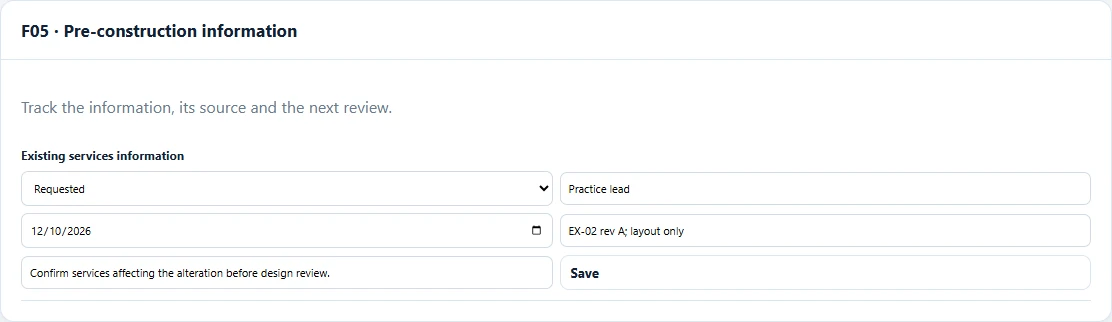
- What information is needed to assess the existing wall before developing the opening proposal?
- Why it matters
- The current layout drawing does not establish the structural conditions on which the proposed change relies.
- Action and owner
- Project architect to coordinate a suitable information request with the structural designer and identify any assessment or investigation needs.
- Review trigger
- Before the affected design is issued; reopen if findings or the proposed opening change.
- Closure evidence
- Reference the actual assessment, its scope and limitations, the resulting decision and the design issue communicating it. Receiving a file is not the same as reviewing its relevance.
How this appears in the workspace
These existing product screenshots show the PCI tracker and design risk form using fictional demonstration information. They illustrate the available fields, not a completed Willow House project or an automated assessment.
A useful handover review
- Can the recipient identify the current drawings and information relevant to future work?
- Are significant assumptions, limitations and unresolved items visible?
- Can the practice trace the issue, recipient and follow-up for each outstanding item?
- Has irrelevant tender correspondence been kept separate from the information intended for future use?
- If the Principal Designer’s appointment changes, is the transfer of records and remaining work explicit?
HSE describes the Principal Designer’s coordination and information-sharing responsibilities. See HSE’s Principal Designer guidance. Use our Health & Safety File guide for the separate handover questions.
Use the example on your next project
Start with one real unresolved question. Record what it affects, who must respond, when the answer is needed and how the resulting decision will be communicated. Add the next question when it arises. Keep the record proportionate, but do not hide gaps behind a general “complete” label.
Download the PCI review checklist, review appointment evidence or discuss a pilot for your practice.
Continue your project review
- Health & Safety File contents and handover guide
- Worked design risk register example
- CDM software for architects
- CDM Principal Designer software
- Pre-construction information checklist
- Design risk assessment and register guide
- CDM and Building Regulations Principal Designer roles
- CDM workflow for architectural practices
General workflow information, not a project-specific determination. Check current official guidance and obtain appropriate professional advice for your project.
← All resources